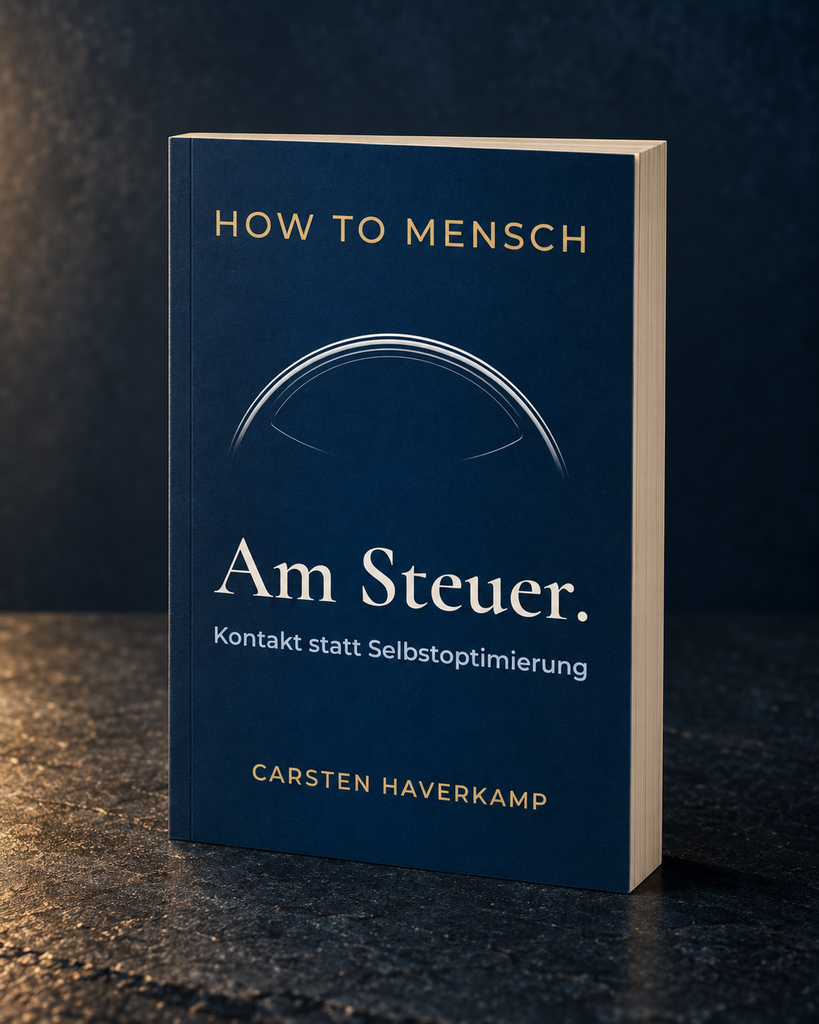
(HOW TO HUMAN)
Deep down, we already know.

That listening usually gets us further than shouting. That people don’t become worth less just because they think differently, look different, or were born somewhere else. That violence rarely ends where it began. And that staying connected to one another becomes surprisingly difficult the moment something in us shifts into defence.
None of this is particularly new.
Quite the opposite.
WE’VE BEEN REMINDING OURSELVES FOR CENTURIES.
We’ve written about it, philosophised about it, researched it and argued over it. We turned some of it into rules, and later into rights. We’ve tried to hold on to what can happen when people, for a while, forget that the others are people too.
We teach it to our children.
“Don’t hit.”
“Let them finish.”
“You don’t have to agree with everything.”
“But at least listen.”
Remarkably sensible, really.
And of course, we sang about it too.
IN 1964, PAUL SIMON WROTE A SONG.
The Sound of Silence.
About people talking to one another without ever really reaching each other. People hearing – without, apparently, really listening.
A few years later, everyone was singing along.
More than fifty years later, Disturbed recorded it again. Different time. Different voice. Different generation. Same words.
And this time, maybe it was you singing along in the car. Louder than your parents did back then.
Maybe even with more feeling.
BUT THE QUESTION REMAINED.
And it didn’t remain only in songs.
We kept looking for answers. In books and classrooms, in science and philosophy, in churches, parliaments and everyday life. We formulated human rights, wrote limits to power into constitutions, and created institutions so conflicts could be settled with words before other means took over.
We built monuments. Not to what we wanted to repeat, but to what should never happen again.
NEVER AGAIN.
Two words. So familiar that hardly anyone needs them explained.
And perhaps there is something remarkable in that: we never stopped trying. We argued, protested, negotiated and remembered. We tore down walls and built others. We moved closer to one another and further apart again.
We learned, forgot, and reminded ourselves.
Again and again.
AND YET.
Sometimes it takes surprisingly little. A crisis. A threat. A border. A story about who belongs. And another about who doesn’t.
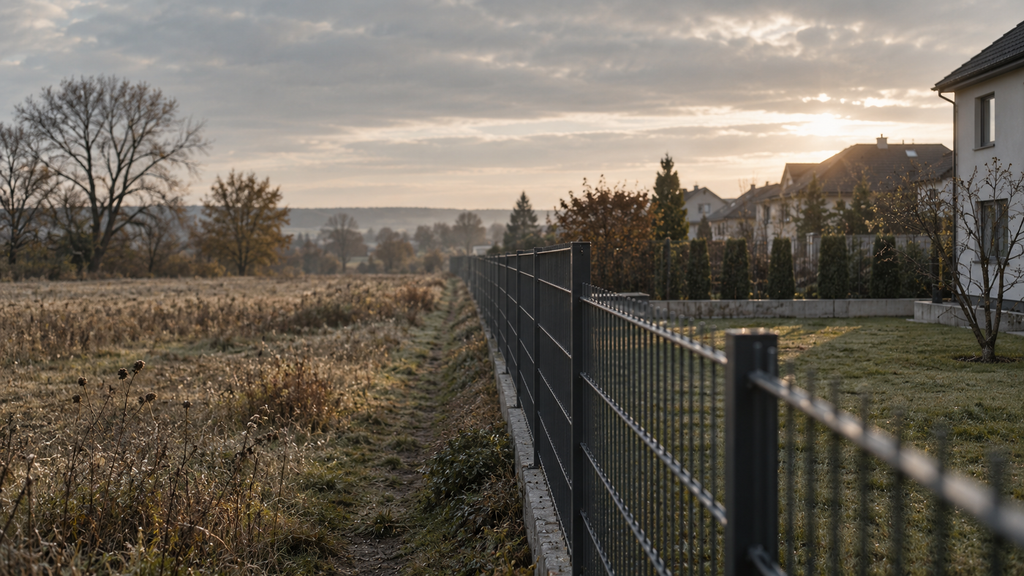
People become groups. Us becomes them. What seemed self-evident only moments ago suddenly comes with conditions. Listening gets harder when the answer has already been decided. Understanding starts to sound suspiciously like agreement. Giving way like weakness.
And eventually, the question of how we want to live together becomes a different one:
Who gets their way?
Maybe it never starts with war. Maybe it starts much earlier. With something that can feel perfectly reasonable.
Safety.
We want to protect our families, our homes, our freedom, our way of life. There is nothing particularly strange about that.
It gets more difficult when someone else suddenly seems to stand between us and that safety. Protection can become separation, separation can become distrust, distrust can become certainty. And the person across from us can eventually become an enemy.
Not always.
But often enough that we know the consequences.
WAR.
No war can be reduced to a single cause. History, power, interests, resources and ideologies all play their part. Some people make decisions, others profit from them, and a great many have to live with the consequences.
Perhaps the world is far too complicated for a simple explanation.
But somewhere inside all that complexity sits something we know rather well.
FEAR.
Not only the great fear of war, loss or an uncertain future. Fear is part of ordinary life. Sometimes we barely notice it. And sometimes all it takes is a sentence, a look or a tone of voice for something to shift.
Suddenly, we listen differently. We see differently. We respond differently. Someone who was simply another person a moment ago can, for an instant, feel like a threat.
Fortunately, most of our conflicts aren’t fought by states. Sometimes they’re simply sitting across from us at the kitchen table.

And of course, an argument is not a war. But perhaps the big questions and the small ones aren’t quite as far apart as we like to think.
We cannot steer the world. Not its history, not its conflicts, and not the people across from us.
But somewhere, our powerlessness ends.
AT THE WHEEL.
Connection instead of self-optimisation.
Volume 1 of HOW TO MENSCH