MAYBE METAL WAS NEVER TOO LOUD.
Maybe metal was never just noise. Maybe it was also a language for things that gentler words eventually were no longer enough for: war, power, alienation, anger, inequality, control, fear. These themes did not begin with metal. They were already there.
THE HIPPIES DISAPPEARED. THE QUESTION DIDN’T.
In the sixties, people sang about peace, war and freedom. Then the guitars got heavier, the voices rougher, the lyrics more direct. But maybe the questions changed less than it first seems. Who pays the price of power? What happens to people under pressure? What happens when someone is no longer heard, protected or respected?
The questions remained. At some point, they just got distortion.
WHEN BEING NICE IS NO LONGER ENOUGH.
Sometimes volume is not a desire to escalate, but what remains when quiet signals have been ignored for too long. When something becomes too close, too tight, too much. When boundaries shift. When responsibility lands on someone who should never have had to carry it.
But the same scream can also arise where something is missing. Too little connection. Too little support. Too little response. Too little of someone who should have been there.
Sometimes it is too much closeness. Sometimes too little. Too much influence. Or too little protection.
Either can push a person out of their centre.
Maybe the scream does not begin with aggression, but with despair. With the attempt to make one’s own integrity audible again.
Here I am. Not like this. This far and no further. Stay.
Different sentences. Maybe the same longing to come back into contact.
When pressure, powerlessness or abandonment grow for long enough, language eventually changes. What has become too large to remain silent acquires sound.
Overpower becomes sound.
ANGER IS NOT ALWAYS THE OPPOSITE OF COMPASSION.
Of course, volume does not make a thought right. Anger is not proof, aggression is not truth, and crossing a boundary is not justified simply because a boundary was crossed before.
But harsh language does not make a question meaningless either.
Maybe it is worth listening beyond the sound from time to time. Not only to how something is being said, but to why it had to become so loud in the first place.
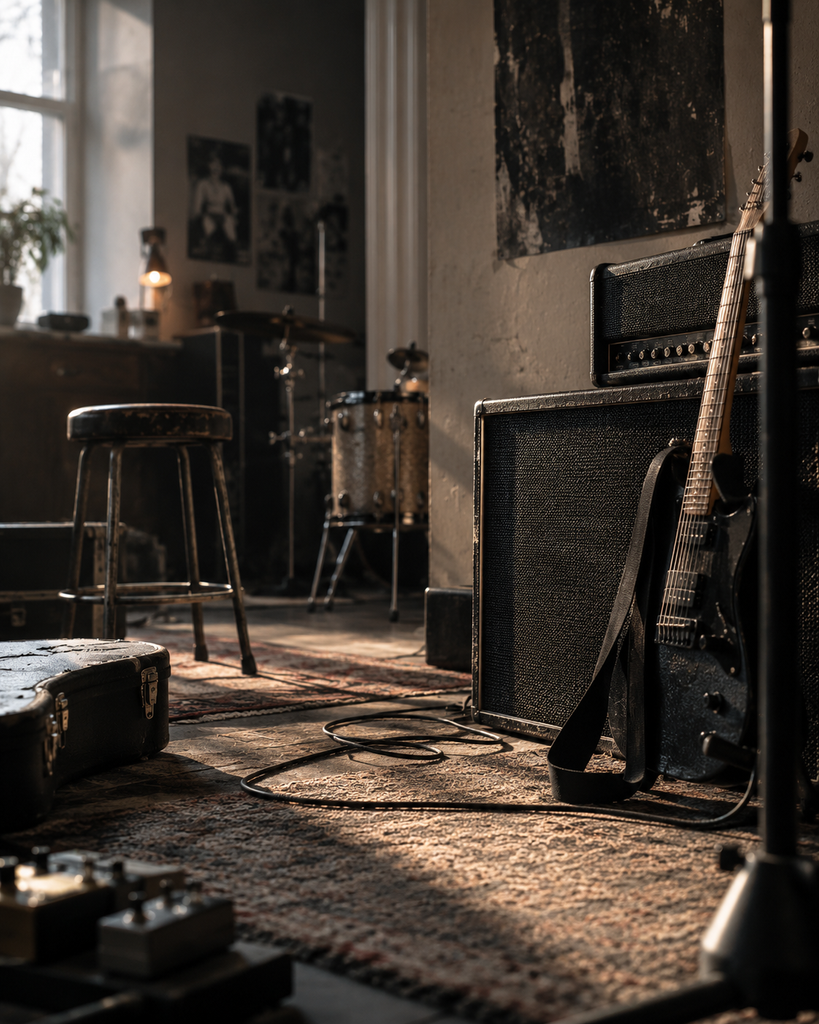
Metal is not only an expression of anger. Sometimes it is also the place where anger is allowed to stay. The amplifier screams so I do not have to. The music holds something that has no good place in everyday life.
MAYBE WE JUST DIDN’T LISTEN PROPERLY.
Metal has often been described as too loud, too aggressive, too dark or too angry. And sometimes it was all of those things.
But underneath were remarkably often the same old themes: war, power, exclusion, violence, powerlessness, abandonment and the attempt to find one’s own boundary or dignity again somewhere.
Not always clever. Not always nuanced. Not always pleasant.
But maybe the real question was never:
Why is this so loud?
But:
What had to remain unheard for so long?
Maybe metal was never too loud.
Maybe we just didn’t listen properly.